
Buying a Holiday Lodge in North Yorkshire: The Complete 2027 Guide
If you’re looking at holiday lodges for sale in North Yorkshire, choosing the lodge itself is only one part of the decision.
The location, holiday park, plot, annual site fees, season length and ownership terms can all have a significant impact on how much you enjoy your holiday home.
North Yorkshire is one of the UK’s most popular destinations for holiday home ownership, offering everything from the landscapes of the Yorkshire Dales to historic market towns, countryside walks, pubs, restaurants and attractions.
This complete 2027 guide covers everything you need to know about buying a holiday lodge in North Yorkshire, whether you’re at the very beginning of your search or already comparing individual parks and lodges.
Key Takeaways
If you’re considering buying a holiday lodge in North Yorkshire:
Choose the park before the lodge. Location, atmosphere and facilities will have a major impact on your ownership experience.
Compare total ownership costs, not just purchase prices. Include annual site fees, utilities, insurance and maintenance.
Pay close attention to the plot. Orientation, privacy, views and outdoor space can make two identical lodges feel completely different.
Compare new and pre-owned lodges. Pre-owned holiday homes can offer excellent value, while new lodges provide the latest layouts and specifications.
Check the park’s season and licence terms. A holiday lodge is generally intended for recreational rather than permanent residential use.
Understand what’s included in the advertised price. Decking and other extras aren’t necessarily included.
Visit the park before buying. Online research is useful, but nothing replaces spending time on the park itself.
In This Guide
This guide covers:
Why buy a holiday lodge in North Yorkshire?
Where to buy a lodge in North Yorkshire
Holiday lodges vs static caravans
How much holiday lodges cost
Annual site fees and running costs
New vs pre-owned lodges
Choosing the right holiday park
Choosing the best plot
Lodge sizes and layouts
Features worth paying for
Park facilities
Season length and winter use
Subletting
Holiday lodge finance and part exchange
Licence periods and ownership terms
Selling your lodge
Questions to ask before buying
How to compare different lodges and parks
Frequently asked questions
Why Buy a Holiday Lodge in North Yorkshire?
North Yorkshire offers an unusual combination of beautiful countryside and plenty to actually do when you arrive.
The Yorkshire Dales provide miles of countryside, walking routes and traditional villages, while towns such as Richmond, Leyburn, Bedale and Northallerton offer independent shops, pubs, cafés and restaurants.
For holiday home owners, one of the biggest attractions is flexibility.
Rather than organising accommodation every time you want to visit Yorkshire, you have somewhere of your own to return to. A free weekend can become a spontaneous countryside break without having to search for hotels or holiday cottages.
A holiday lodge can work particularly well for people who:
Regularly visit North Yorkshire
Enjoy countryside holidays
Want somewhere to escape to at weekends
Have family or friends in the region
Enjoy walking, cycling or outdoor activities
Want more space than a traditional caravan
Plan to take frequent UK holidays
The key question isn’t simply whether you like North Yorkshire.
It’s whether you can imagine returning to the same part of North Yorkshire regularly for years to come.
If the answer is yes, ownership may be worth exploring.
Where Is the Best Place to Buy a Holiday Lodge in North Yorkshire?
There isn’t one best location for everyone.
North Yorkshire is a large county, so start by thinking about the type of experience you want from your holiday home.
Near the Yorkshire Dales
If countryside is the priority, look at parks offering easy access to the Yorkshire Dales.
This can put walking routes, villages, country pubs and some of Yorkshire’s best-known landscapes within easy reach of your lodge.
Locations around Leyburn and Richmond can be particularly useful because they combine countryside access with amenities nearby.
Near a Market Town
Being close to a market town can make lodge ownership much more convenient.
Places such as Richmond, Leyburn, Northallerton and Bedale offer shops, supermarkets, restaurants, cafés and pubs, giving you more options when spending longer periods at your holiday home.
Rural and Woodland Locations
If you’re buying primarily to escape busy everyday life, you may prefer a smaller countryside or woodland park.
These locations can offer greater tranquillity and privacy, although you’ll need to consider how far you’re prepared to travel for shops, restaurants and attractions.
Consider the Journey From Home
One of the most overlooked considerations is travel time.
A spectacular holiday park isn’t necessarily the right choice if the journey means you’ll rarely use it.
If you imagine using your lodge for regular weekends, choose somewhere you can realistically reach after work on a Friday.
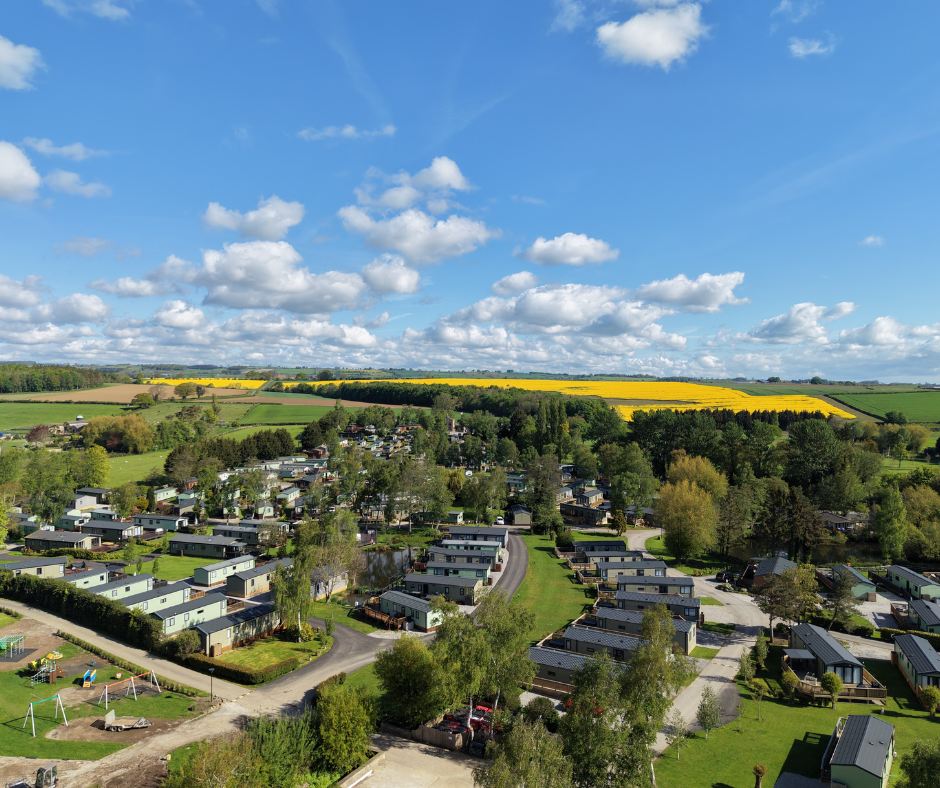
Holiday Lodge or Static Caravan?
One of the first decisions is whether you actually need a lodge.
Modern static caravans can offer extremely high specifications, so the distinction isn’t simply about quality.
Holiday lodges tend to be wider and more spacious, with layouts designed to feel more like conventional homes.
Depending on the model, a lodge might include:
Large open-plan living areas
Full-size kitchens
Two or three bedrooms
En-suite bathrooms
Walk-in wardrobes
Freestanding furniture
Large windows
Patio doors
Integrated appliances
Generous decking areas
Twin-unit lodges can offer particularly impressive living space.
However, a high-specification static caravan may provide everything you need at a lower purchase price and potentially with lower annual site fees.
The right question is therefore:
How much space will you actually use?
Explore our current lodges for sale in Yorkshire or read more about lodge ownership in Yorkshire.
How Much Are Holiday Lodges for Sale in North Yorkshire?
There is no single standard price for a holiday lodge in North Yorkshire.
Prices depend on several factors:
Manufacturer
Model
Size
Number of bedrooms
Specification
New or pre-owned condition
Holiday park
Plot position
Decking
Additional features
Large twin-unit lodges will generally cost considerably more than smaller single-unit models, while premium plots can also affect the overall package.
This is why comparing advertised prices alone can be misleading.
What Is Included in the Price?
Before comparing two lodges, establish exactly what each price includes.
Ask whether it covers:
The lodge
Delivery
Siting
Connections
Decking
Steps
Furniture
Appliances
Parking
Landscaping
Any initial fees
A cheaper advertised lodge isn’t necessarily the cheaper option once everything has been added.
What Are the Annual Costs of Owning a Holiday Lodge?
The purchase price isn’t the only cost to consider.
Typical ongoing costs include:
| Cost | What to Check |
|---|---|
| Site fees | Annual charge and what it includes |
| Electricity | Metered or included |
| Gas | Bottled, metered or piped |
| Water | Included or separately charged |
| Insurance | Required level of cover |
| Maintenance | Lodge and decking upkeep |
| Rates/charges | Ask the individual park what applies |
| Internet | Included or optional |
| Subletting costs | If applicable |
Holiday Lodge Site Fees
Most holiday parks charge an annual site fee.
This pays for your lodge’s position on the park and contributes towards the operation and maintenance of the park and its communal areas.
Fees vary considerably between parks.
Rather than simply asking:
“Which park has the cheapest site fees?”
ask:
“What am I getting for my site fees?”
A park with extensive grounds, facilities, events and a large on-site team may naturally have different fees from a smaller park with fewer amenities.
Always request the current fee and ask how increases are handled.
For more common ownership questions, read our holiday home ownership FAQs.
New vs Pre-Owned Holiday Lodges
You’ll usually find both new and pre-owned lodges for sale in North Yorkshire.
Neither is automatically the better choice.
Benefits of Buying New
A new lodge can offer:
Latest interior designs
Modern appliances
Contemporary layouts
Improved insulation and specification
No previous owners
Potential choice of plot
Potential specification choices
For buyers who want something completely fresh, new can be particularly appealing.
Benefits of Buying Pre-Owned
Pre-owned lodges can offer:
Lower initial purchase prices
Higher specifications within the same budget
Established plots
Existing decking
Mature surroundings
Immediate availability
Sometimes the real attraction of a pre-owned lodge is the plot rather than the lodge.
Premium locations on established parks aren’t always available for new development, so buying pre-owned can provide access to particularly desirable positions.
Browse our pre-owned holiday homes to see current options.
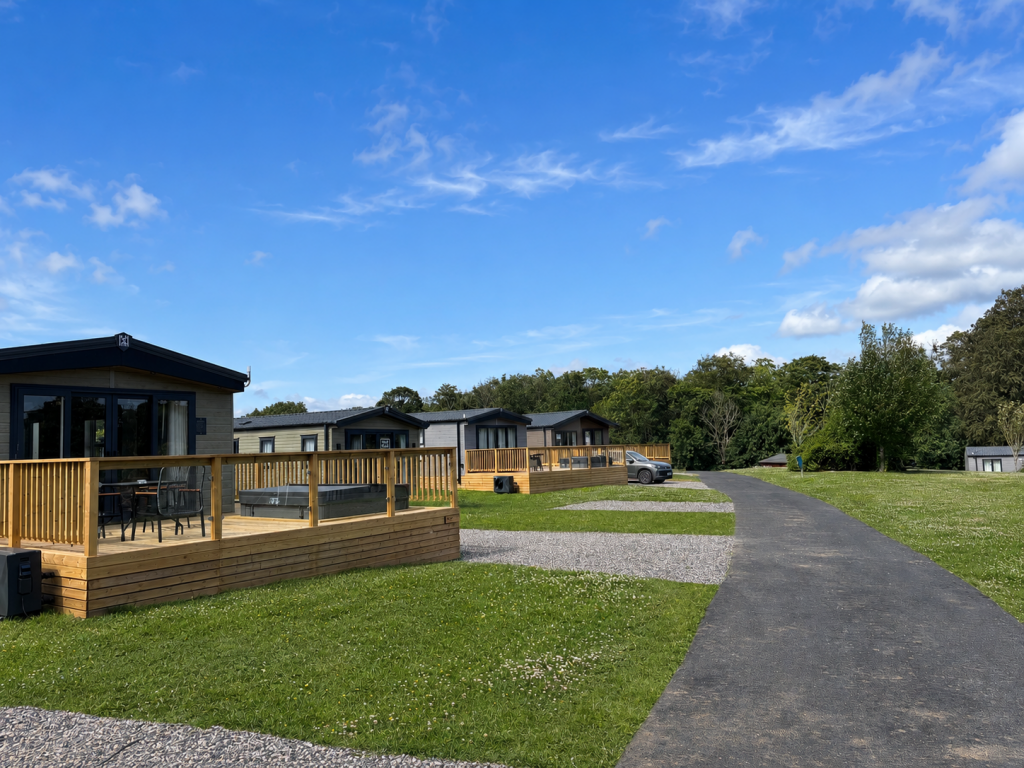
How to Choose the Right Holiday Park
This is arguably the most important part of buying a holiday lodge.
You can change your furniture.
You may eventually change your lodge.
You can’t change where the park is.
When comparing parks, consider five areas.
1. Location
What can you reach from the park?
Look at:
Towns and villages
Restaurants and pubs
Walking routes
Attractions
Supermarkets
Golf courses
Cycling routes
Family activities
Think about what an ordinary weekend at your lodge would actually look like.
2. Atmosphere
Different holiday parks have very different personalities.
Some are busy and sociable. Others are deliberately peaceful.
Some have lots of family facilities, while others are aimed more towards couples and owners looking for quiet countryside breaks.
Spend enough time at the park to understand its atmosphere.
3. Facilities
Facilities can add significantly to the ownership experience, but only if you’ll use them.
Depending on the park, facilities might include:
Restaurants and bars
Golf
Padel or tennis
Children’s play areas
Walking trails
Fishing
Wellness facilities
Gyms
Cafés
Owner events
Don’t automatically choose the park with the longest facilities list.
Choose the park with the facilities you’ll genuinely use.
4. Park Team
Holiday home ownership is an ongoing relationship with the park.
Consider how the team communicates with owners, how well the park is maintained and whether you feel comfortable asking questions.
5. Ownership Community
Some people want a very sociable experience with regular owner events.
Others want somewhere they can arrive, close the door and enjoy complete peace.
Neither is better. You simply need to know which suits you.
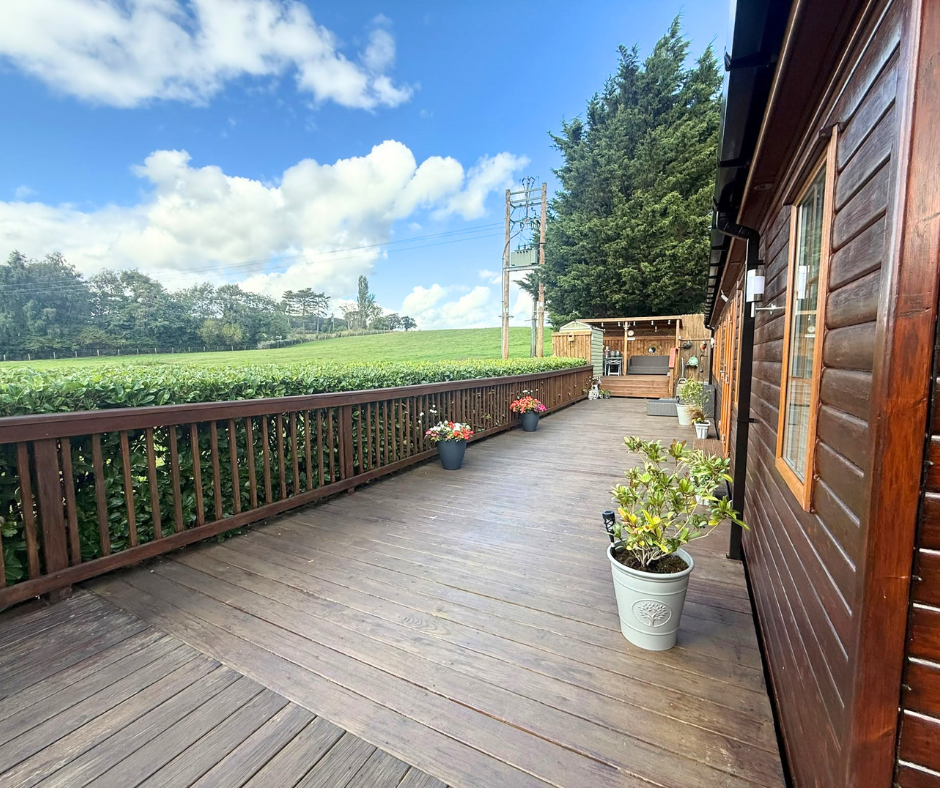
Choosing the Right Plot
Once you’ve found the right park, the plot can be almost as important as the lodge.
Two identical holiday lodges can provide completely different experiences depending on where they’re positioned.
Orientation
Consider where the sun will be throughout the day.
If you imagine enjoying evening drinks on your decking, the direction your outdoor space faces matters.
Views
Open countryside, woodland, lakes and landscaped gardens can all create attractive settings.
Premium views can also make certain plots particularly sought after.
Privacy
Look beyond the lodge itself.
Consider:
Neighbouring lodges
Roads
Footpaths
Communal areas
Restaurants
Play areas
Parking
Trees and hedges
A central plot can be convenient, while a perimeter plot may provide more privacy.
Decking and Outdoor Space
If outdoor living is important to you, establish what size and style of decking the plot can accommodate.
Ask whether decking is included in the purchase price.
Parking
Consider where you and your guests will park and how easy it is to unload luggage or shopping.
Tip: When viewing a plot, spend five minutes standing outside without discussing the lodge. Look at the surroundings and imagine spending a summer afternoon there.
What Size Holiday Lodge Should You Buy?
Bigger isn’t automatically better.
Think about how many people will use the lodge most of the time, rather than the maximum number of people you might occasionally accommodate.
Two-Bedroom Lodges
Two-bedroom lodges are popular with couples and smaller families.
They often provide:
Larger bedrooms
More wardrobe space
En-suite facilities
More generous living areas
Three-Bedroom Lodges
Three bedrooms can work particularly well for larger families, grandparents or owners who frequently invite guests.
However, compare the actual floorplans.
Adding another bedroom within the same overall dimensions can mean smaller bedrooms or reduced living space.
Single vs Twin-Unit Lodges
Single-unit lodges can provide an excellent balance between space and price.
Twin-unit lodges are generally much wider and can feel closer to a bungalow, offering expansive kitchens, lounges and bedrooms.
Visit several before deciding which format you prefer.
What Lodge Features Are Worth Paying More For?
It’s easy to focus on interior styling when viewing lodges.
Instead, prioritise features that will genuinely affect how you use your holiday home.
Open-Plan Living
A large kitchen, dining and living area works particularly well for holiday use because everyone can spend time together.
Large Windows
If you’ve chosen a beautiful countryside plot, large windows and patio doors allow you to enjoy it from inside.
Good Insulation
If you intend to use your lodge during autumn and winter, insulation and heating become particularly important.
Storage
Holiday homes accumulate belongings surprisingly quickly.
Look for wardrobes, kitchen cupboards and practical storage for walking boots, coats and outdoor equipment.
En-Suite Bathrooms
An en-suite can be particularly useful if friends or family regularly stay.
Decking
For many owners, decking becomes another room during warmer months.
A good outdoor seating area can dramatically increase the usable space of your holiday home.
Can You Use a Holiday Lodge All Year?
This depends on the individual holiday park.
Parks have different operating seasons, so never assume that every lodge can be used throughout the year.
Some parks offer long seasons or holiday use across all 12 months.
However, a 12-month season does not automatically mean residential use is permitted.
A holiday lodge on a holiday park is generally intended for holiday and recreational use.
Before buying, ask:
What is the park season?
Can I visit during winter?
Are there restrictions on length of stays?
Can family and friends use the lodge?
What proof of a permanent residential address is required?
Check the individual park’s licence and ownership agreement carefully.
Can You Sublet a Holiday Lodge?
Subletting policies vary considerably.
Some parks actively offer holiday letting programmes.
Others allow owners to arrange their own bookings.
Some don’t permit commercial subletting at all.
If rental income forms part of your buying decision, establish the rules before purchasing.
Ask:
Is subletting allowed?
Who manages bookings?
What commission applies?
Who handles cleaning?
Are there restrictions on owner use?
Who handles guest issues?
Are there additional insurance requirements?
What realistic occupancy might be achievable?
Don’t purchase based solely on projected income without understanding the associated costs and restrictions.
Can You Finance a Holiday Lodge?
Finance options may be available depending on the park, holiday home and buyer.
If you’re considering finance, look beyond the monthly payment.
Make sure you understand:
Deposit
Amount borrowed
Interest rate
Term
Total amount repayable
Monthly payments
Any early repayment conditions
Finance is subject to status and terms will vary.
Can You Part Exchange a Static Caravan or Lodge?
Some holiday parks and dealers offer part exchange if you already own a holiday home.
This can potentially simplify the process of moving parks or upgrading your existing holiday home.
The value offered will depend on factors such as:
Age
Manufacturer and model
Condition
Specification
Current location
Market demand
Ask for a clear explanation of how your part-exchange valuation has been calculated. At Akebar and our sister parks, Kiplin and Flowery Dell, we do offer part exchange.
How Long Can You Keep a Holiday Lodge?
This is an important question to ask before purchasing.
Holiday parks usually operate under a licence agreement that sets out how long a holiday home can remain on the park.
Policies differ, so don’t assume that a rule you’ve encountered at one park applies elsewhere.
Ask:
“What is the licence period for this particular lodge, and what happens when it ends?”
You should understand this before signing any purchase agreement.
Can You Sell Your Holiday Lodge?
Usually, yes, subject to the terms of your park agreement.
However, parks can have different procedures and charges relating to private sales or resale through the park.
Before buying, ask:
Can I sell privately?
Does the park handle resale?
Are there commission charges?
Does the buyer need park approval?
Can the lodge remain on its existing plot?
Are there age or licence restrictions?
Understanding your eventual exit options is just as important as understanding how you buy.
Is a Holiday Lodge a Good Investment?
It’s sensible to distinguish between a financial investment and a lifestyle investment.
Holiday lodges shouldn’t automatically be assumed to increase in value like residential property.
For many owners, the return comes from having somewhere of their own where they can regularly spend weekends, holidays and time with family.
If your main motivation is financial return, analyse the proposition very carefully.
If your motivation is having a place you love visiting regularly, the decision is different.
What Questions Should You Ask Before Buying a Holiday Lodge?
Before agreeing to purchase, make sure you can answer all of these:
What is included in the purchase price?
How much are the annual site fees?
What do the site fees include?
How are electricity, gas and water charged?
What is the park season?
What is the lodge’s licence period?
Are there restrictions on how I use the lodge?
Can friends and family stay?
Can I sublet?
Can I sell the lodge?
Is decking included?
What insurance do I need?
Are pets allowed?
What facilities are included?
Are there any other annual charges?
How are future site fee increases handled?
Who maintains the plot?
What happens at the end of the licence period?
Are there any park rules I should know about?
Who should I contact if I have a problem?
A reputable park should be comfortable answering these questions clearly.
How to Compare Holiday Lodges for Sale in North Yorkshire
Once you start viewing holiday lodges for sale in North Yorkshire, it can become difficult to remember which park offered what.
Use the same criteria for every option.
| Compare | Park/Lodge 1 | Park/Lodge 2 | Park/Lodge 3 |
|---|---|---|---|
| Purchase price | |||
| What’s included | |||
| Annual site fees | |||
| Location | |||
| Travel time from home | |||
| Plot | |||
| Views | |||
| Privacy | |||
| Lodge size | |||
| Bedrooms | |||
| Decking | |||
| Park facilities | |||
| Season | |||
| Licence | |||
| Subletting | |||
| Overall feeling |
The final row matters more than you might expect.
You’re choosing somewhere to spend your free time.
It needs to feel right.
A Simple 5-Step Guide to Buying a Holiday Lodge
Step 1: Choose Your Area
Decide which parts of North Yorkshire you’d realistically like to visit regularly.
Step 2: Shortlist Holiday Parks
Compare location, atmosphere, facilities, fees and season length.
Step 3: Visit the Parks
Never choose solely from a website.
Walk around, explore the facilities and spend some time in the surrounding area.
Step 4: Compare Lodges and Plots
Once you’ve found a park you like, start comparing individual holiday homes.
Consider the plot and lodge together.
Step 5: Review the Ownership Agreement
Before purchasing, make sure you understand all fees, rules, licence terms and restrictions.
For more detail on the process, read our complete guide to buying a holiday home.
Holiday Lodges for Sale North Yorkshire: FAQs
How much does a holiday lodge cost in North Yorkshire?
The cost varies depending on the manufacturer, size, specification, age, holiday park and plot. Compare the complete package rather than the lodge price alone, including decking, siting and annual fees.
Where is the best place to buy a holiday lodge in North Yorkshire?
The best location depends on how you want to use your holiday home. Areas close to the Yorkshire Dales are ideal for countryside and walking, while locations near towns such as Richmond, Leyburn and Northallerton provide convenient access to shops, restaurants and other amenities.
What are the annual costs of owning a holiday lodge?
Typical costs can include annual site fees, utilities, insurance and maintenance. Costs vary between parks, so request a full breakdown before purchasing.
Can you live permanently in a holiday lodge?
A lodge situated on a holiday park is generally intended for holiday and recreational use rather than as your permanent residence. Always check the site’s specific licence and ownership agreement.
Can I use my holiday lodge in winter?
Potentially. This depends on the park’s operating season. Some parks offer longer or 12-month holiday seasons, while others close for part of the winter.
Is a lodge better than a static caravan?
Not necessarily. Lodges generally provide more space, while modern static caravans can offer extremely high specifications at lower purchase prices. Your budget, required space and intended use should determine which is right for you.
Is it better to buy a new or pre-owned lodge?
New lodges provide the latest designs and specifications, while pre-owned lodges can offer excellent value and desirable established plots. It’s worth viewing both.
Do holiday lodges lose value?
Holiday lodges shouldn’t be treated in the same way as residential property and shouldn’t automatically be expected to increase in value. Age, condition, location, remaining licence and market demand can all affect resale value.
Do you pay site fees on a holiday lodge?
Yes, most holiday parks charge annual site fees. These vary according to the park and sometimes the size or type of holiday home.
Can you get finance for a holiday lodge?
Finance may be available, subject to status and the options offered by the park or finance provider. Make sure you understand the total amount repayable rather than looking only at monthly payments.
Can you part exchange a holiday lodge?
Some parks and dealers offer part exchange for existing static caravans and lodges. Valuations depend on the holiday home’s age, model, condition and other factors.
Can you rent out a holiday lodge?
This depends on the park. Some allow or manage subletting, while others restrict holiday homes to private use.
Start Your Search for a Holiday Lodge in North Yorkshire
There are plenty of lodges for sale in Yorkshire, but finding the right holiday home isn’t simply a matter of choosing the most impressive lodge within your budget.
Start with the location.
Then find the right holiday park.
Choose the plot.
Understand the ownership costs and terms.
Then choose your lodge.
Taking that approach gives you a much better chance of finding somewhere you’ll genuinely want to return to year after year.
If you’re ready to start looking, explore our current lodges for sale in Yorkshire, learn more about lodge ownership in Yorkshire or browse our pre-owned holiday homes.
For further comparisons and independent holiday home content, take a look at At Your Leisure’s guide to lodges for sale in North Yorkshire.
The best holiday lodge isn’t necessarily the biggest or most expensive. It’s the one on the right park, in the right location, on the right plot for the way you want to spend your time.
Receive a Brochure
Need our help, or looking for more information?

Information
Own a Holiday Home
Holidays
Get in Touch
Email: [email protected]
Akebar Park
Leyburn
North Yorkshire
DL8 5LY
United Kingdom
Akebar Park Leisure Limited (FRN: 653132) is an Introducer Appointed Representative of Plum Underwriting Limited, who are authorised and regulated by the Financial Conduct Authority (FRN: 309166)
Website design and development by Thrive